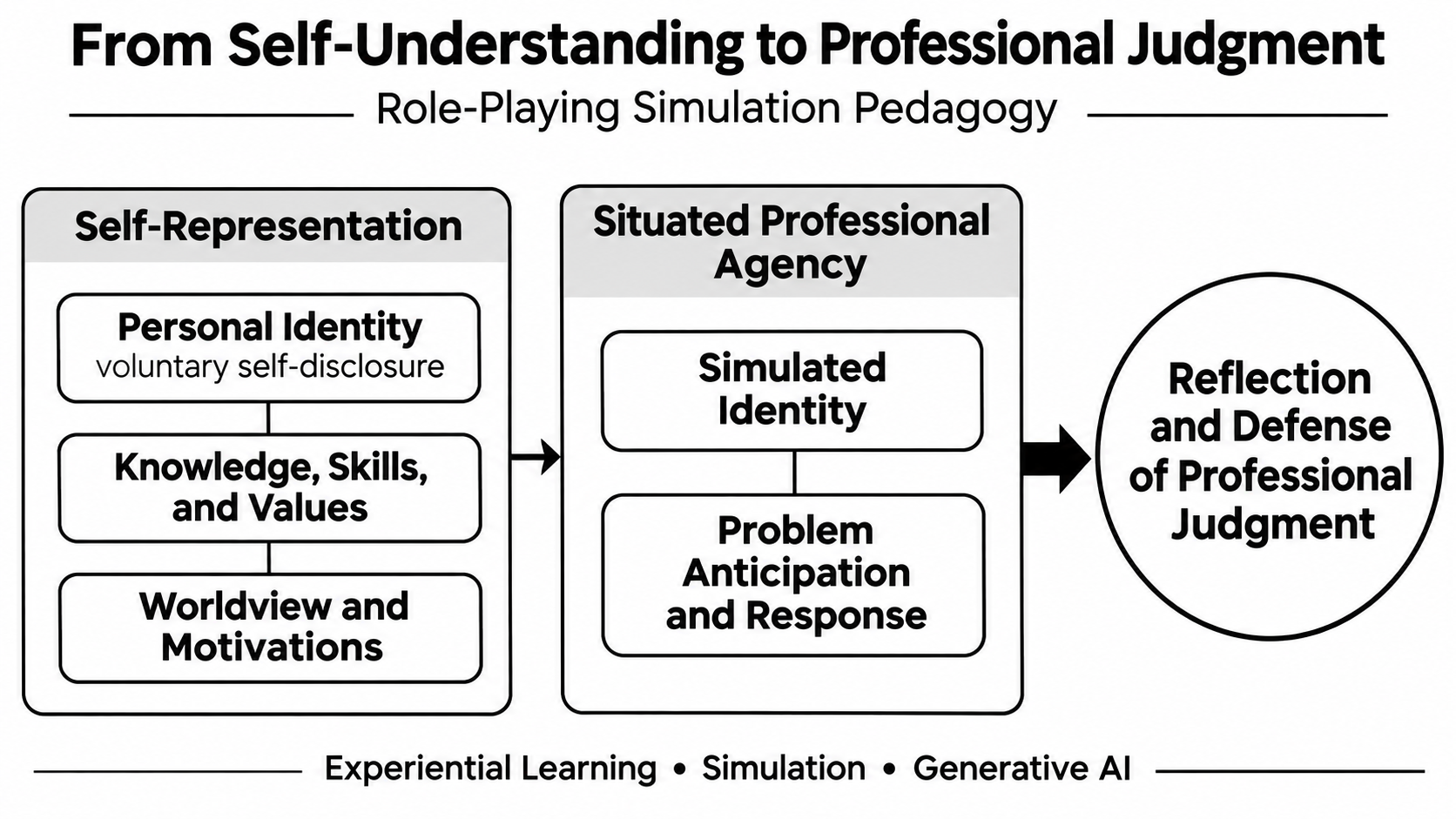
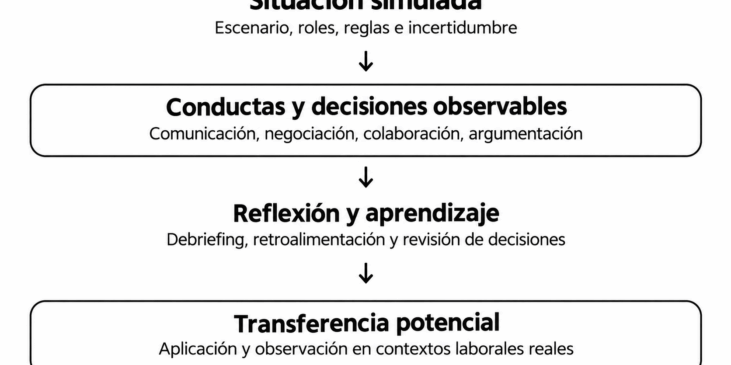
Black-and-white diagram illustrating role-playing simulation pedagogy, connecting self-representation, simulated professional identity, and reflective judgment.

From Self-Understanding to Professional Judgment: Why Higher Education Needs Role-Playing Simulation Pedagogy

Role-playing simulation (RPS) moves beyond identifying students’ knowledge, skills, and values. By integrating experiential learning, simulated professional identities, and generative AI, RPS creates opportunities for students to anticipate challenges, make decisions, and defend their professional judgment.
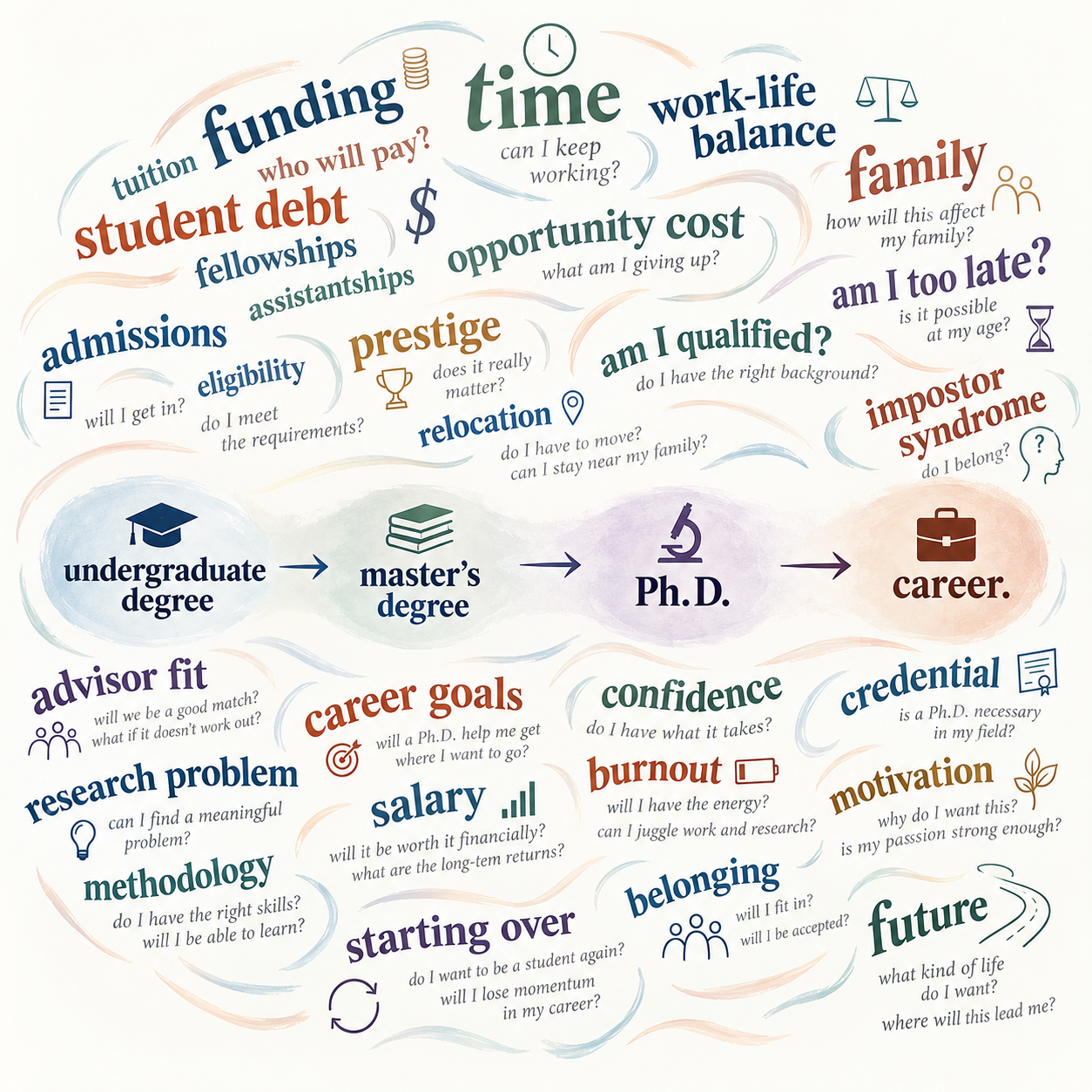
Illustration of the traditional undergraduate degree to master’s degree to Ph.D. to career pathway, surrounded by common questions, barriers, and concerns faced by working professionals considering doctoral study.

Thinking About a Ph.D. While Working? Start With the Research Problem

If you are already working and considering a Ph.D., your professional experience should not be treated as a detour. It can become the foundation for identifying a research problem, choosing the right doctoral program, and developing the theoretical and methodological expertise needed for the next stage of your career.

AI-Aware Co-Creation: Rethinking Human–AI Collaboration in Education

Generative AI is changing education from individual production toward human–AI co-creation. This article introduces AI-aware co-creation as an asymmetrical process in which AI contributes generative possibilities while humans retain epistemic agency, evaluative authority, and accountability.

Paradigma interpretativo y constructivismo en marketing digital

El paradigma interpretativo, el constructivismo y el constructivismo social están relacionados, pero no son equivalentes. Este artículo explica sus diferencias y muestra cómo fundamentar investigaciones cualitativas, cuantitativas y mixtas en un trabajo de titulación de marketing digital.

Modelo GPE para Construir un Marco Teórico Doctoral

l Modelo General-Particular-Específico (GPE) es una herramienta metodológica que organiza la revisión de literatura mediante un proceso de definición, delimitación y demostración. En esta adaptación, el modelo se utiliza para estructurar el marco teórico de investigaciones interdisciplinarias mediante una matriz convergente de cuatro columnas y tres niveles.
Portada del libro Artificial Intelligence in Educational and Business Ecosystems: Convergent Perspectives on Agency, Ethics, and Transformation, publicado por Frontiers Research Topics.

Capítulo en Artificial Intelligence in Educational and Business Ecosystems

Comparto con entusiasmo que mi trabajo sobre inteligencia artificial en educación STEM forma parte de Artificial Intelligence in Educational and Business Ecosystems: Convergent Perspectives on Agency, Ethics, and Transformation, un volumen de Frontiers disponible en acceso abierto.

Guía ADA para PDF accesibles: cómo hacer documentos accesibles en Adobe Acrobat Pro

Esta guía explica cómo crear, revisar y remediar documentos PDF accesibles desde el archivo fuente y en Adobe Acrobat Pro. Presenta principios, flujo de trabajo, elementos obligatorios y buenas prácticas institucionales para fortalecer cumplimiento, inclusión y resiliencia digital.

ADA Guidelines for Accessible PDFs: How to Create Accessible Documents in Adobe Acrobat Pro

This guide explains how to create, review, and remediate accessible PDF documents from the source file and in Adobe Acrobat Pro. It presents core principles, workflow steps, required elements, and institutional best practices to strengthen compliance, inclusion, and digital resilience.