
By: Cristo León, James Lipuma & Marcos O. Cabobianco
Blog post about the article published in Analog Game Studies (2024), Special Issue: Perspectives on RPG Studies from Latin-American Scholars.
Introduction
Tabletop role-playing games (TTRPGs) are sustained not only by rules or systems, but by long-term narrative engagement, shared rituals, and collaborative meaning-making. This article presents a systematic literature review focused on identifying the constitutive factors that make campaigns effective—and what distinguishes Mega-Campaigns from conventional role-playing campaigns.
Systematic Literature Review
The study synthesizes existing scholarship on TTRPG campaigns to identify recurring analytical dimensions. Rather than offering anecdotal guidance, the review aggregates research-based insights to clarify how conflict, cooperation, ritual, and narrative function together to sustain immersive and enduring play experiences.
Core Constitutive Factors
The review identifies several interdependent elements that characterize effective campaigns:
- Narrative: The backbone of TTRPGs, providing story coherence, meaning, and context for player agency.
- Conflict: Challenges that drive tension, growth, and decision-making across combat, social, and cognitive dimensions.
- Cooperation: Collective problem-solving and teamwork that sustain group cohesion and shared purpose.
- Ritual: In-game and out-of-game practices that establish rhythm, immersion, and community continuity.
- Multi-Dimensional Characters: Characters with complex motivations, relationships, and developmental arcs that evolve over time.
What Is a Mega-Campaign?
Building on the literature, the article defines Mega-Campaigns as extended, epic role-playing experiences that surpass conventional campaign structures. Mega-Campaigns are characterized by:
- Extensive duration, often spanning months or years
- High narrative complexity and interconnectivity
- Integration of multiple genres and source materials
- Collaborative construction of shared mythology
- Deep reliance on ritual, cooperation, and sustained conflict
These campaigns function as living narrative systems, where continuity, memory, and player investment are central to the experience.
Campaigns vs. Mega-Campaigns
The article concludes by comparing standard campaigns with Mega-Campaigns, highlighting how scale, duration, and epistemic commitment transform the role-playing experience. While all Mega-Campaigns are campaigns, not all campaigns achieve the structural and cultural density required to become Mega-Campaigns.
Contribution to RPG Theory
By consolidating dispersed scholarship into a coherent framework, this study provides game masters, players, and researchers with a shared vocabulary for understanding long-form role-playing. It advances Role-Playing Game Theory (RPGT) by grounding Mega-Campaigns in identifiable, research-supported factors rather than anecdotal tradition.
Paper Abstract
Table-top role-playing games (TTRPGs) provide immersive storytelling experiences, and understanding the factors contributing to effective campaigns is crucial for game masters and players alike. This abstract presents insights derived from a systematic literature review on TTRPG campaigns, focusing on the role of conflict, Cooperation, ritual, and Narrative in creating captivating and engaging experiences. The study identifies vital elements characterizing effective campaigns, including well-constructed storylines, detailed settings, balanced gameplay, clear rules, diverse characters, and active player engagement. Conflict and Cooperation are highlighted as vital components, offering challenges and opportunities for players to collaborate and overcome obstacles. Finally, Ritual and Narrative are recognized for their immersive qualities, fostering a deeper connection between players and the game world.
Moreover, the review explores the concept of Mega-campaigns, which transcend conventional campaign structures by incorporating extensive duration, complexity, and interconnectivity. Mega-campaigns involve collaborative storytelling, multi-dimensional characters, and an emphasis on conflict and Cooperation. By understanding these factors and classifications, game masters and players can effectively design and participate in TTRPG campaigns that captivate and immerse participants. These abstract guides enthusiasts seek to create memorable and engaging TTRPG experiences, fostering a collective understanding of the essential elements contributing to successful campaigns.
The article presents the systematic literature review results, a definition and classification of mega-campaigns, and how they contribute to player engagement. The discussion then focuses on answering the question of what a mega-campaign is and how it can be classified. Finally, the paper closes by comparing and contrasting Campaigns and Mega-campaigns, ultimately concluding their strengths and characteristics. By providing this comprehensive overview, the authors aim to guide TTRPG enthusiasts who seek to create memorable and engaging experiences by providing them with the resources identified in the review, with the final goal of fostering a collective understanding of the essential elements contributing to successful TTRPG campaigns, allowing game masters and players to elevate their storytelling and gameplay to new heights.
Keywords: Mega-campaigns, TTRPGs (Table-top Role-playing Games), Conflict, Cooperation, Ritual, Narrative, Multi-Dimensional Characters, Role-playing Games, Role-playing Campaigns, Systematic Literature Review (SLR).
Presented at Institución Universitaria Pascual Bravo, Bogotá, Colombia:
7mo Coloquio Internacional de Estudios sobre Juegos de Rol (León et al., 2023)
Read Our Paper
You can access our paper in the Analog Game Studies journal], Vol. XI, No. 3, pp. 1-30], 2024. Read here
Acknowledgments
Special thanks to Jimena Serret for her unconditional support.
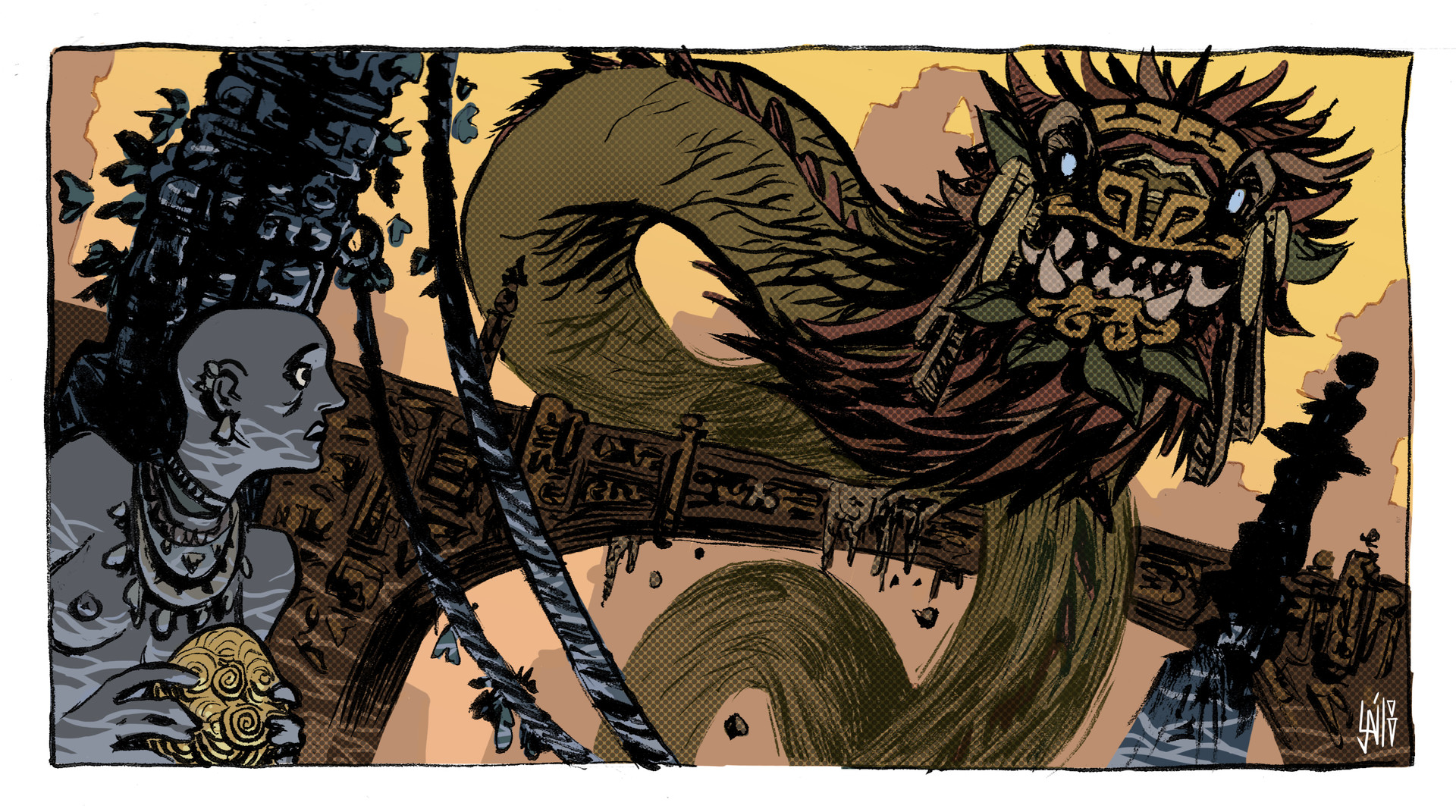
Art: Leonardo Lujan, dibujante
Dr. Edgar Meritano non-blind peer reviewer
Disclosure of Support Statement of Contributions (DSSC): No con-flict of interest pertains to the research presented above. The fullDSSC can be accessed here: https://osf.io/pncjf
Cite this Article
León, C., Lipuma, J., & Cabobianco, M. O. (2024). Constitutive Factors of Mega-Campaigns in TTRPGs: A Systematic Literature Review. Analog Game Studies, 11(3), 30. https://analoggamestudies.org/2024/10/constitutive-factors-of-mega-campaigns-in-ttrpgs-a-systematic-literature-review/
ISSN: 2643-7112
License: Creative Commons CC BY 4.0
Keywords: mega-campaigns; TTRPGs; narrative; ritual; cooperation; conflict; systematic literature review; RPG theory
Interested in Exploring or Collaborating?
If you are researching long-form play, campaign design, narrative systems, or Role-Playing Game Theory, 📩 get in touch, share this post, or cite the article to extend scholarly dialogue on Mega-Campaigns.
Copyright
© 2024 León, Lipuma & Cabobianco. Published under Creative Commons CC BY 4.0. The Authors. AGS, 2024.
Factores Constitutivos de las Mega-Campañas en los TTRPGs: Una Revisión Sistemática de la Literatura
Este artículo presenta una revisión sistemática de la literatura sobre campañas de juegos de rol de mesa, con el objetivo de identificar los factores que sostienen experiencias narrativas extensas y altamente inmersivas, conocidas como Mega-Campañas.
A partir del análisis de conflicto, cooperación, ritual y narrativa, el texto propone una definición operativa de Mega-Campaña y la distingue de campañas tradicionales por su duración, complejidad y nivel de compromiso colectivo.