
By Cristo León, Ph.D.
LAst update May 11, 2026
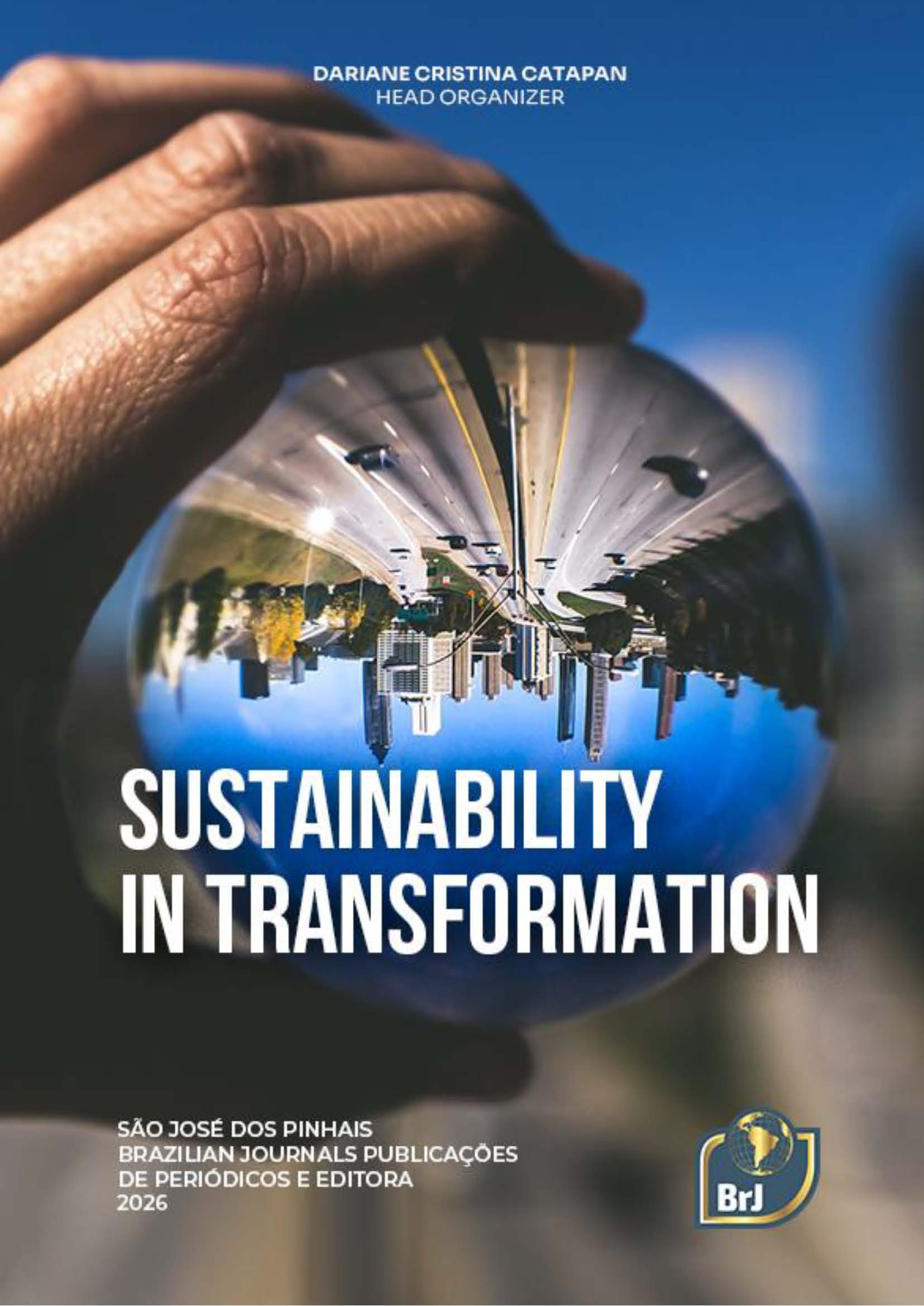
We are excited to announce our recent chapter publication, “Collaborative Intercultural Transdisciplinary Communication as Infrastructure for Collaborative Innovation,” in Sustainability in Transformation. This work, a collaborative effort by Cristo León and James Lipuma, examines how communication can function as infrastructure for collaborative innovation across cultural, disciplinary, and organizational boundaries (León & Lipuma, 2026).
Discover Our Insights [abstract]
The chapter argues that collaborative innovation often fails not because teams lack effort, activity, or technical skill, but because communication is treated as a stream of interaction rather than as a governance infrastructure. We introduce Collaborative Intercultural Transdisciplinary Communication (CITC) as a socio-technical capability that helps teams stabilize shared meaning, make commitments traceable, and reduce translation fragility across disciplinary, institutional, and cultural boundaries.
The chapter also develops the concept of the Completion Trap, a recurring failure mode in which teams produce finished-looking outputs that remain non-interoperable, fragile, or difficult to implement. As a practical response, the chapter proposes the CITC Alignment Loop, a governance cycle designed to make alignment visible, inspectable, and revisable through shared lexicons, scenario cards, decision logs, assumptions registers, and coherence checks.
Introduction
Collaborative innovation depends on more than coordinated activity. Teams may meet frequently, exchange information, and complete deliverables while still failing to converge on shared meaning. This problem becomes more pronounced in intercultural and transdisciplinary settings, where assumptions about evidence, authority, agreement, disagreement, and decision-making often differ across participants.
This chapter reframes communication as the infrastructure through which collaborative work becomes durable, transferable, and actionable. Rather than treating communication as a soft interpersonal skill or a matter of meeting frequency, we position it as a designable governance condition for interpretive coherence, traceability, and interoperability.
Read Our Chapter
You can access our chapter in Sustainability in Transformation:
León, C., & Lipuma, J. (2026). Collaborative intercultural transdisciplinary communication as infrastructure for collaborative innovation. In D. C. Catapan (Ed.), Sustainability in Transformation (1st ed., Chapter 15, pp. 236–281). Editora Brazilian Journals. https://doi.org/10.35587/brj.ed.978-65-6016-137-5
Read here: https://doi.org/10.35587/brj.ed.978-65-6016-137-5
Acknowledgments
We thank the editor, D. C. Catapan, and Editora Brazilian Journals for the opportunity to contribute to Sustainability in Transformation. We also acknowledge the broader communities of scholars and practitioners working in collaborative innovation, collective impact, intercultural communication, transdisciplinary research, and organizational governance. Their work provides the intellectual foundation for examining communication not simply as interaction, but as infrastructure for coordinated and accountable collaboration.
Disclosure statement
No conflict of interest pertains to the research presented above.
ORCID
Cristo Leon https://orcid.org/0000-0002-0930-0179
James Lipuma
https://orcid.org/0000-0002-9778-3843
Copyright
© Cristo León and James Lipuma, 2026
Citation
When citing this paper, use this format:
León, C., & Lipuma, J. (2026). Collaborative Intercultural Transdisciplinary Communication as Infrastructure for Collaborative Innovation [PDF]. In D. C. Catapan (Ed.), Sustainability in Transformation (1st ed., p. Chapter 15. 236-281). Editora Brazilian Journals. /Research/Collaboration & Convergence (CLDM_LDO). https://doi.org/10.35587/brj.ed.978-65-6016-137-5