
By Cristo Leon, Ph.D.
Last reviewed: April 13, 2026.
Reaching my first 100 citations is a meaningful milestone. It marks not only a numerical threshold but also a moment to reflect on how research begins to circulate, gain recognition, and enter broader scholarly conversations. Citation counts do not define the total value of academic work, but they do offer one visible indicator of uptake. They show that an idea was encountered, used, extended, or debated by others.
For that reason, I wanted to pause and conduct a simple analysis of My First 100 Citations.
Annual Distribution of the First 100 Citations
The annual distribution is as follows:
| Year | Number | Percentil | Cumulative |
| 2022 | 1 | 1% | 1 |
| 2023 | 3 | 3% | 4 |
| 2024 | 21 | 21% | 25 |
| 2025 | 52 | 52% | 77 |
| 2026 | 23 | 23% | 100 |
Because the total is exactly 100, these counts also function as percentages of the whole. This makes the pattern especially easy to interpret. The trajectory is clearly upward. The early years show initial emergence, 2024 marks a strong increase in visibility, 2025 becomes the dominant year of expansion, and 2026 continues at a substantial pace.
Of the 100 citing works, most were journal articles (69), followed by book sections (11) and theses (9). Conference papers (6) and books (4) made up a smaller share, while blog posts (1) were rare. This distribution shows that the citation base is anchored primarily in peer-reviewed journal literature, with additional uptake across graduate research, edited volumes, and conference scholarship.
What the Pattern Suggests
The first conclusion is that this is not a flat or linear citation curve. It is a pattern of delayed emergence followed by accelerated uptake.
That matters because research often moves slowly at first. Articles need time to be published, indexed, discovered, read, incorporated into other manuscripts, and eventually cited in print. In many cases, the effect of a publication is not immediate. Its visibility grows through academic time, not calendar time. A citation often reflects months or even years of diffusion.
Seen in that light, My First 100 Citations do not simply represent accumulated references. They show a maturing research footprint.
2022 to 2023: Initial Emergence
The first two years were modest in numerical terms. With 1 citation in 2022 and 3 in 2023, the work was just beginning to appear in the scholarly record.
This early stage is important. It represents the period in which publications begin to exist beyond their original venue and become available for reuse. At that point, the work has entered academic circulation, but has not yet reached broad uptake.
Rather than reading these years as weak, I read them as formative. They mark the earliest trace of visibility.
2024: The First Major Inflection Point
The increase from 3 citations in 2023 to 21 in 2024 is the first major turning point.
This suggests that the work became more visible, more discoverable, or more useful across a wider range of conversations. By 2024, the research appears to have moved beyond occasional citation and into more regular scholarly engagement. The work was no longer only present. It was becoming legible to others as something worth citing.
In simple terms, 2024 looks like the year in which visibility became traction.
2025: The Expansion Year
The strongest concentration appears in 2025, with 52 citations. That means more than half of My First 100 Citations occurred in a single year.
This is the clearest sign of consolidation and expansion. Once a body of work becomes recognizable, connected, and relevant across adjacent areas, citation activity often becomes more regular. What had been a set of individual publications begins to operate more like a coherent research agenda.
That seems to be what 2025 represents here. The work was not only being noticed. It was being integrated into ongoing scholarship at scale.
A year accounting for 52% of the first 100 citations is analytically significant because it signals sustained uptake rather than isolated acknowledgment.
2026: Continuation and Ongoing Accumulation
The 23 citations recorded in 2026 should be interpreted carefully. Since the year is still in progress, this number does not represent a full annual total. For that reason, it should not be read as a decline from 2025.
Instead, 2026 already shows that citation activity remains active and substantial. Even as an incomplete year, it accounts for nearly a quarter of the first 100 citations. This indicates that the work continues to circulate and that the base established in prior years is still generating scholarly engagement.
In other words, the momentum remains visible.
A Note on Pace
From the first citation on July 27, 2022, toApril 13, 2026, 1,356 days have passed.
Across that span, these first 100 citations represent an average of one citation every 13.56 days. Put differently, the work has been cited at a pace of roughlyone citation every two weeks.
I find this perspective useful because it reframes the milestone in temporal terms. Citation growth is often easier to appreciate when viewed as a rhythm rather than only as a total. From that angle, My First 100 Citations reflect a steady pattern of scholarly engagement over time.
Four Phases in My First 100 Citations
Taken together, the pattern can be read as four phases:
1. Initial emergence
The work begins to appear in citation records, but only at a limited scale.
2. Visibility growth
The research gains broader recognition and becomes more regularly citable.
3. Strong expansion
Citation activity accelerates substantially, indicating wider scholarly uptake.
4. Continuing consolidation
The work remains active in citation networks and continues to circulate meaningfully.
This phased reading helps show that the first 100 citations were not accumulated evenly. They emerged through a process of scholarly maturation.
List of sources
- From Intent to Impact: Enabling Transdisciplinary Research for Responsible Scientific Stewardship (Sinclair, 2024)
- Políticas y Prácticas de Educación Inclusiva en Latinoamérica: Una Revisión Sistemática [Inclusive education policies and practices in Latin America: a systematic review] (Barreno, 2024)
- Exploring Teachers’ Perceptions of Licensed Professional Counselors in a High School (Spergel, 2024)
- Measures to revitalize Korean traditional music education according to the ‘Green Smart Future School (Eui-jin, 2023)
- Exploration of Higher Education Delivery of Artistic Sport Curriculum in the UK and China (Zhou, 2023)
- Refocusing and Futuring Perspectives on AI in Marketing (Hyman & Lukosius, 2024)
- The Effect of STEAM on the ACT STEM Benchmark (Zinecker, 2024)
- STEM Club Evaluation Scale: Validity and Reliability Study (Gokce et al., 2022)
- Conocimientos Tecnológicos y el Espacio de Trabajo Matemático Idóneo de Profesores en la Enseñanza de Cuadriláteros (Flores Salazar et al., 2024)
- Exploring Ethical Frontiers: A Survey Into the Prevalence of Artificial Intelligence in Academic Writing (Okina, 2024)
- Plans for the Vitalization of Korean Traditional Music Education according to “Green Smart Future School” (Ui Jin (단국대학교), 2023)
- Future-Readiness and Islamic Education: Perspectives from Singapore (Tan & Hasman, 2024)
- Embrace, Don’t Avoid: Reimagining Higher Education with Generative Artificial Intelligence (Rizky Noviandy et al., 2024)
- Collaboration Between Stakeholders in the Design of a Context-Based Curriculum in Ghana (Edjah et al., 2024)
- AI-Driven Innovations in Pedagogical and Andragogical Approaches: A Case Study Analysis [Chapter 9] (Asrifan et al., 2024)
- Integrating AI Into Pedagogical Education (Viktor, 2024)
- A Bibliometric Exploration of the Intersection Between Artificial Intelligence and Social Responsibility: Evidence From Scopus (Boubaa et al., 2024)
- The Legitimate Use of ChatGPT to Ensure Academic Integrity in Higher Education (Khan et al., 2024)
- Explorando la Influencia de las Metodologías STEM con Enfoque CTSA en la Percepción Ambiental: Un Estudio en la IE Integrado de Soacha JT (Umaña-Valdés, 2024)
- Leveraging Undergraduate Perspectives to Redefine AI Literacy (Ebert & Kramarczuk, 2025)
- Implementing Generative AI in Academic Writing Seminars (Höpner & Uckelmann, 2024)
- Navigating the Privacy Paradox in a Digital Age: Balancing Innovation, Data Collection and Ethical Responsibility (Jones, 2025)
- La educación superior. Un análisis de la calidad y la relevancia en la formación de los docentes. una revisión sistemática (Vásquez et al., 2025)
- Ficción y Conexión: Estudio de Casos sobre el Uso de Juegos de Rol para Fortalecer las Relaciones Sociales en la Infancia con Altas Capacidades (Montel-Sola, 2025)
- Advancing Path of Digital Empowerment in the Reform of Intelligent Teaching Design (Wang et al., 2025)
- Convergence of AI and Metaverse: Pioneering New Frontiers in Scientific Research (Berry et al., 2025)
- STEM Teacher Training Methodology: A Pathway for Its Integration in Primary and Secondary Education | Metodología de Formación Docente en STEM: Ruta para su Integración en la Educación Básica y Media (Amaya-Fernández, Agudelo Velásquez, et al., 2024)
- Diseño y Validación de un Modelo de Capacitación para Docentes de Matemáticas Modalidad Académica del Nivel Secundario del Distrito 14-01 de Nagua, República Dominicana, en el Año Educativo 2023-2024 (Bobonagua-Mercedes & Ubiera de D’Oleo, 2024)
- Convergence of Formal and Non-Formal Foreign Language Education: An Analysis of Prospective Teachers in Terms of Professional Competencies (Tleuzhanova et al., 2025)
- Human-AI Educational Collaboration: Facing Learning Challenges in the Digital Age (Revolusi & Krisna Febriandy, 2025)
- Design, Implementation, and Evaluation of Faculty Member Evaluation Process Using Electronic 360-Degree Method (Tatari et al., 2025)
- Exploring the Long-Term Influence of the Online Course Design Primer on Faculty Teaching Practices Using the Kirkpatrick Evaluation Model (Ling Fong, 2025)
- The Impact of Project-Based Flex Blended Learning Model on Critical Thinking Skills of Students in Science Courses (Erwinsyah et al., 2025)
- Creatividad infantil mediante el enfoque STEAM en la parroquia Buenavista (Children’s creativity through the STEAM approach at Buenavista parish) (Matías et al., 2025)
- Convergence Research for Sustainable Regional Systems (Chang et al., 2025)
- Metodología de Formación Docente: Implementando la Educación STEM en Establecimientos Educativos (Amaya-Fernández, Agudelo-Velásquez, et al., 2024)
- AI as a Bridge Between Theory and Practice in Teacher Education: How Textual and Metaverse-Based ChatGPT Modalities Shape Help-Seeking (Kim et al., 2025)
- Missing an Opportunity (Spuzic, 2025)
- Fortalecimiento de las Competencias en los Números Racionales Mediante Unidad Didáctica Basada en ABP mediada por eXeLearning en estudiantes de grado 7 de la IE Las Palmitas, ubicada en el municipio de Majagual, Sucre (Bravo-Acuña et al., 2025)
- Exploring the Perception of Science Teachers in Integration of AI in Biology Education: Literature Review (Victoriano & Tamayo, 2025)
- From Role-play to Virtual Reality: A Review of Simulation in English Language Teaching (Lan et al., 2025)
- Integrating Artificial Intelligence in STEM Classrooms: A Mixed-Methods Study of Models, Outcomes, and Ethical Challenges (Pai H. et al., 2025)
- Artificial Intelligence to Enhance STEM Education for Students With Autism (Howorth et al., 2025)
- A Meta-Analysis of AI-Enabled Personalized Stem Education in Schools (Li et al., 2025)
- Augmented Reality and Virtual Reality: Transforming the Learning Experience with AI Tools (Natarajan et al., 2025)
- Generative Artificial Intelligence in Educational Technologies (Deveci et al., 2025)
- Researching Ourselves (Horne, 2025)
- Artificial Intelligence Meets PBL: Transforming Computer-Robotics Programming Motivation and Engagement (Omeh & Ayanwale, 2025)
- Constructive Alignment as a Framework for Enhancing Motivation and Higher-Order Thinking in Science Classrooms: A Systematic Synthesis (Rifan & Latif, 2025)
- The Power of Games From Traditional to Digital for the 21st Century Survival Skills: A Case Study (Şendurur & Mutlu, 2026)
- Guru PAI sebagai Digital Role Model: Strategi Pembentukan Karakter Islami Siswa di Era Society 5.0 (Halimah et al., 2025a)
- There’s No Good News: Journalism, Crisis, and the Philosophy of Praxis (Hirst, 2025)
- Developing the Integrated Analysis Matrix (I-AM): A Data-Minding Approach for Better Ludonarrative Design-Based Research in Education (Matthys Knoetze, 2025)
- STEM Undergraduates’ Perceptions of AI Chatbots: A Cross-Sectional Descriptive Survey (Kajan et al., 2025)
- Tirani yang Tersenyum dalam Bayang Kiamat Epistemik: Evolusi Kekuasaan dari Orwellian ke Huxleyian – Part I (Mustawwadhaar, 2025)
- Knowledge Mapping of Deep Learning in Mathematics Instruction: A Bibliometric Study (Annur et al., 2025)
- Reconstruction of the marketing curriculum system based on digital technology stack and algorithm engineering (Hao & Zhang, 2025)
- STEM for All: An Equity-Oriented AI Personalization Framework for Inclusive Cognitive Tutoring (Mahmood et al., 2025)
- Classroom Applications of Question Formulation to Support Problem-Solving in Computer Science (Quinlan & Edwards, 2025)
- STREAM: A Semantic Transformation and Real-Time Educational Adaptation Multimodal Framework in Personalized Virtual Classrooms (Nouraei Yeganeh et al., 2025)
- Enhancing Learning Outcomes in Smart Education: A Supervised Machine Learning Predictive Analytics Model for Course Completion (Bakhouyi et al., 2025)
- Innovating the Classroom: Cross-Disciplinary Group Research Pedagogy in the Philippine Undergraduate Context (Salindo & Salindo, 2025)
- Career Service Mechanism for Promoting Career Diversification of International Doctoral Students in the Humanities and Social Sciences in Japan / 日本における人文社会科学分野の博士留学生のキャリア多様化を促進するキャリアサービスメカニズムに関する研究 (Yu, 2025)
- Artificial Intelligence’ Receptiveness for Inclusive Education at Obafemi Awolowo University, Nigeria (Temitope et al., 2025)
- Pioneering Smart Leadership: Integrating AI Analytics to Transform STEM Education Management for the Future (Akash, 2025)
- Statistics Learning Innovation Through Contextual Numeration of Literacy E-Module (Adiastuti et al., 2025)
- Innovating the Classroom: Cross-Disciplinary Group Research Pedagogy in Guihulngan City’s Undergraduate Education (Salindo & Bandico Salindo, 2025)
- Teachers’ Perceptions of AI Tools for Enhancing Student Motivation and Learning Engagement in Higher Education (Hermanto et al., 2025)
- Design Guidelines for Integrating Artificial Intelligence into Preservice Teacher English Foreign Language and STEAM Education (Vasconcelos et al., 2025)
- From Assistance to Autonomy: AI Integration in Structured Research-Based Learning for Higher Education (Festiyed et al., 2026)
- Leveraging Artificial Intelligence for Simulation and Visualisation in STEM Education: A Theory-Informed Narrative Synthesis (Deckker & Sumanasekara, 2025)
- Islamic Religious Educators in Society 5.0: Challenges and Strategies for Digital Character Formation in Smart Classrooms (Halimah et al., 2025b)
- A Conceptual Exploration of AI-Generated Tools in English Language Teaching and Learning (Mohamad Sahidan et al., 2026)
- Culturally Responsive AI: Enhancing Student Engagement and Belonging in Transnational Education (Ala, 2026)
- The PROSE model for teaching with artificial intelligence: constructive alignment of prompt engineering with learning objectives (Kellam & Pérez Cortés, 2026) (Yang & Yang, 2026)
- Alienation and Liberation in Ludic Interaction: Reconstructing Human-Machine Intersubjectivity and Ethical Governance in the Age of Artificial Intelligence
- Exploring Physics Students’ Attitudes Toward ChatGPT Using the ABC Model (Veith et al., 2026)
- Redefinicja zespołów interdyscyplinarnych: sztuczna inteligencja jako współtwórca w projektach kreatywnych [Redefining interdisciplinary teams: artificial intelligence as a co-creator in creative projects] (Klein, 2025)
- Inclusive Education: STEM in the Age of Modern AI (Herath et al., 2026)
- Augmented Creativity Uniting Human Intuition and Artificial Intelligence in Design (Shome et al., 2025)
- Human–AI Collaboration in Creativity, Design, and Innovation (Putri & Sekti, 2025)
- AI Awareness, Literacy, and Social Influence Predict Ethical Reasoning and Responsible Use in Higher Education (Febrianti et al., 2026)
- Enabling Federated Learning in the Classroom: Sociotechnical Ecosystem on Artificial Intelligence Integration in Educational Practices (Yakin et al., 2024)
- Ejecución de Proyectos STEM Como Estrategia para Elevar los Estándares de Educación en Estudiantes de Nivel Superior (Flores-Cedillo et al., 2026)
- Male-Dominated Participation in the First Two Years of Medical School: A Mismatch Between Reality and Perception (Park et al., 2026)
- A Systematic Review of Generative Artificial Intelligence for Inclusive Second Language Writing in Low‑Resource Contexts (Mahading et al., 2026)
- Birdbuddy in the Classroom: Leveraging AI-Powered Bird Feeders for Undergraduate Biology Education (Tripepi et al., 2026)
- Rethinking Education for a More Inclusive and Future-Ready AI Era (Oyetade & Zuva, 2025)
- The Role of ChatGPT in Sport and Physical Education: A Scoping Review Using the SWOT Analysis Framework (Lai, 2026)
- Academic Integrity and Students’ Ethical Use of ChatGPT in Higher Education (Shishakly & Nachouki, 2026)
- The Effects of Universal Design for Learning and AI-AT on the Engagement and Academic Outcomes of Students with Disabilities (Anwar et al., 2026)
- Redefining Global Creative Sectors Through AI and Human Augmentation (Rabby et al., 2026)
- Artificial Intelligence in the Sport Marketing Classroom (Schulz et al., 2026)
- Artificial Intelligence as a New Technology in Education of Marketers (Murtuzalieva & Tsvetkova, 2025)
- Three Decades of Students’ Partnerships in Pedagogical Co‑Design: A Scientometric Mapping of an Emerging Research Landscape (Boruzie et al., 2026)
- Mapping Constructive Alignment Research In Science Education: A Bibliometric and Network Analysis (2000–2025) (Rifan et al., 2026)
- Open Auditorium—A human-centric extended reality blended learning tool (Isop, 2026)
- Artificial Intelligence: Impacts on Higher Education Institutions. A Literature Review (do Lago et al., 2026)
- Proposed Biology Teaching Unit Using Artificial Intelligence for Third-Year Secondary Students and Its Impact on Developing Preventive Medicine Concepts (Al-Muqbil, 2026)
- Artificial Intelligence in Simulation-Based Education Training for TVET (Mustafa et al., 2026)
Why This Milestone Matters
For me, the meaning of My First 100 Citations is not confined to the number itself. Each citation represents a moment in which another scholar found something in the work that was useful enough to reference. That is what gives citations their real significance. They are signs that ideas have traveled.
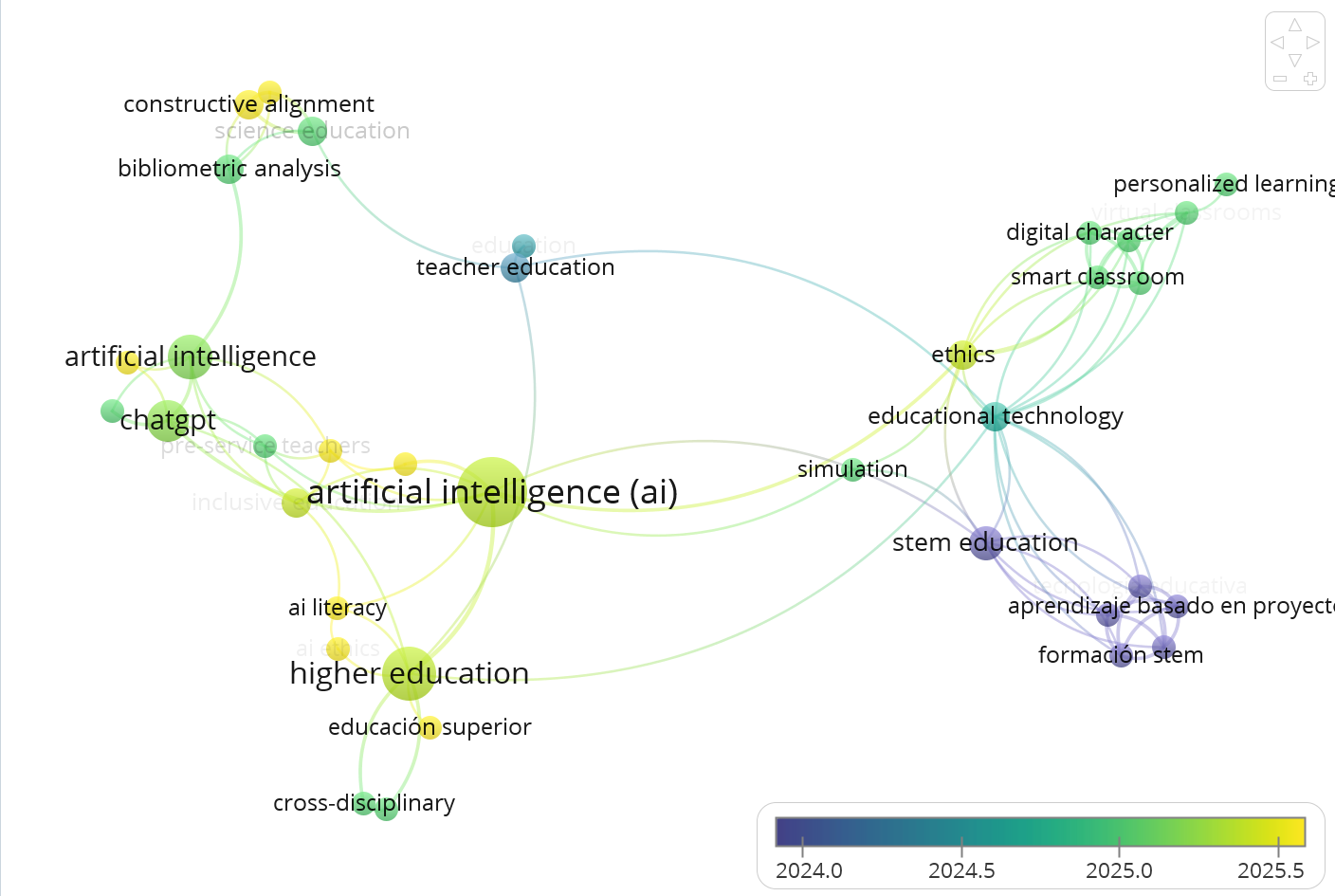
This is especially meaningful when research operates across areas such as artificial intelligence, STEM education, higher education, collaboration, educational technology, and transdisciplinary inquiry. In such contexts, citations often indicate that a concept or framework has crossed boundaries and entered more than one intellectual space.
That kind of movement matters more to me than a count alone. It suggests connection, uptake, and participation in larger academic conversations.
Looking Ahead
These first 100 citations offer a baseline for more detailed analysis. Future reflection could examine which publications are cited most frequently, which concepts travel most widely, which disciplines engage the work most actively, and how citation patterns align with collaboration networks or thematic clusters.
For now, however, this simple analysis already tells a meaningful story. The work began quietly, gained visibility, expanded substantially, and continues to circulate. That trajectory is encouraging.
My First 100 Citationsare not an endpoint. They are an early marker that the research has entered the scholarly record in a visible way and that its trajectory is still unfolding.
Thank you to the scholars, collaborators, students, and readers who have engaged with this work and helped these ideas travel.
Sources
Adiastuti, N., Nisa, Z. K., & Sageta, R. (2025). Statistics Learning Innovation Through Contextual Numeration of Literacy E-Module. Jurnal Inovasi Teknologi Pendidikan, 12(3), 353–365. https://doi.org/10.21831/jitp.v12i3.87935
Akash, M. (2025). Pioneering Smart Leadership: Integrating AI Analytics to Transform STEM Education Management for the Future. Al-Qanṭara, 11, 40–68. https://doi.org/10.5281/zenodo.17958430
Ala, M. (2026). Culturally Responsive AI: Enhancing Student Engagement and Belonging in Transnational Education. In Digital Frontiers of AI in Transnational Education (pp. 161–184). IGI Global Scientific Publishing. https://doi.org/10.4018/979-8-3373-5403-3.ch006
Al-Muqbil, N. S. M. (2026). Proposed Biology Teaching Unit Using Artificial Intelligence for Third-Year Secondary Students and Its Impact on Developing Preventive Medicine Concepts. Periodicals of Engineering and Natural Sciences, 14(2), 65–78. https://doi.org/10.21533/pen.v14.i2.1893
Amaya-Fernández, F. O., Agudelo Velásquez, O. L., Cano Vasquez, L. M., & Angel Uribe, I. C. (2024). STEM Teacher Training Methodology: A Pathway for Its Integration in Primary and Secondary Education | Metodología de Formación Docente en STEM: Ruta para su Integración en la Educación Básica y Media. Revista Electrónica de Tecnología Educativa (Edutec), (90), 34–53. Scopus. https://doi.org/10.21556/edutec.2024.90.3393
Amaya-Fernández, F. O., Agudelo-Velásquez, O. L., Cano-Vasquez, L. M., & Angel-Uribe, I. C. (2024). Metodología de Formación Docente: Implementando la Educación STEM en Establecimientos Educativos. Edutec, Revista Electrónica de Tecnología Educativa, (90), 34–53. https://doi.org/10.21556/edutec.2024.90.3393
Annur, M. F., Liliana, S., Suprihatiningsih, S., & Rangkuti, R. K. (2025). Knowledge Mapping of Deep Learning in Mathematics Instruction: A Bibliometric Study. AlphaMath: Journal of Mathematics Education, 11(2), 159–176. https://doi.org/10.30595/alphamath.v11i2.27981
Anwar, M., Karsidi, R., Sunardi, S., & Widyastono, H. (2026). The Effects of Universal Design for Learning and AI-AT on the Engagement and Academic Outcomes of Students with Disabilities. International Journal of Learning, Teaching and Educational Research, 25(3), 557–581. https://doi.org/10.26803/ijlter.25.3.24
Asrifan, A., Shafa, S., Octaberliana, L. R., Ersyad, Z. M., Hermansyah, S., Amri, N. A., Asrifan, A., Shafa, S., Octaberliana, L. R., Ersyad, Z. M., Hermansyah, S., & Amri, N. A. (2024). AI-Driven Innovations in Pedagogical and Andragogical Approaches: A Case Study Analysis [Chapter 9]. In Integrating AI Into Pedagogical Education (1st ed., p. 30). IGI Global Scientific Publishing. (ai-driven-innovations-in-pedagogical-and-andragogical-approaches). https://doi.org/10.4018/979-8-3693-6130-6.ch009
Bakhouyi, A., Dehbi, A., Amhaimar, L., Tazouti, Y., Nadir, Y., & Khalidi, A. (2025). Enhancing Learning Outcomes in Smart Education: A Supervised Machine Learning Predictive Analytics Model for Course Completion. IAES International Journal of Artificial Intelligence (IJ-AI), 14(6), 4711–4721. https://doi.org/10.11591/ijai.v14.i6.pp4711-4721
Barreno, P. (2024). Políticas y Prácticas de Educación Inclusiva en Latinoamérica: Una Revisión Sistemática [Inclusive education policies and practices in Latin America: a systematic review]. Revista de Investigación Educativa Niveles, 1(2), 14–31. https://doi.org/10.61347/rien.v1i2.61
Berry, K., Kumar, S., Kaushik, R., & Shukla, A. (2025). Convergence of AI and Metaverse: Pioneering New Frontiers in Scientific Research (pp. 77–98). https://doi.org/10.4018/979-8-3373-0340-6.ch004
Bobonagua-Mercedes, F., & Ubiera de D’Oleo, L. (2024). Diseño y Validación de un Modelo de Capacitación para Docentes de Matemáticas Modalidad Académica del Nivel Secundario del Distrito 14-01 de Nagua, República Dominicana, en el Año Educativo 2023-2024 [PhD Thesis, Universidad Abierta para Adultos. Escuela de Postgrado]. https://rai.uapa.edu.do/handle/123456789/2701
Boruzie, P. K., Hassan, M. M., & Kausar, N. (2026). Three Decades of Students’ Partnerships in Pedagogical Co‑Design: A Scientometric Mapping of an Emerging Research Landscape. Discover Education. https://doi.org/10.1007/s44217-026-01453-6
Boubaa, A., Toufik, B. B., & Smaali, D. (2024). A Bibliometric Exploration of the Intersection Between Artificial Intelligence and Social Responsibility: Evidence From Scopus. Brazilian Journal of Business, 6(4), e75821–e75821. https://doi.org/10.34140/bjbv6n4-060
Bravo-Acuña, A. L., Cabarcas-Corrales, A. M., Lozada-Martínez, K. K., & Martínez-Mercado, S. (2025). Fortalecimiento de las Competencias en los Números Racionales Mediante Unidad Didáctica Basada en ABP mediada por eXeLearning en estudiantes de grado 7 de la IE Las Palmitas, ubicada en el municipio de Majagual, Sucre. [Tesis de maestría, Universidad de Cartagena]. https://repositorio.unicartagena.edu.co/bitstreams/52e0311a-2671-4dd5-bbe4-2771e73cadce/download
Chang, H., Roe, B., Erkoc, M., Heyman, J., Foo, K., Sanyal, D., Banerjee, D., Rushforth, R., & Srinivasan, J. (2025). Convergence Research for Sustainable Regional Systems. iScience, 28, 113104. https://doi.org/10.1016/j.isci.2025.113104
Deckker, D., & Sumanasekara, S. (2025). Leveraging Artificial Intelligence for Simulation and Visualisation in STEM Education: A Theory-Informed Narrative Synthesis. International Journal of Science and Research Archive, 16(2), 901–913. https://doi.org/10.30574/ijsra.2025.16.2.2412
Deveci, M., Bardakçi, S., & Görmez, Y. (2025). Generative Artificial Intelligence in Educational Technologies. In Artificial Intelligence Future Frontiers of Generative AI in Engineering (1st ed., pp. 242–271). Livre de Lyon.
do Lago, M. M., Fernandes, E., Rampersad, R., & Fernandes, V. A. (2026). Artificial Intelligence: Impacts on Higher Education Institutions. A Literature Review. Learning Futures and Emerging Technologies, 1–14. https://doi.org/10.1108/LFET-08-2025-0100
Ebert, J., & Kramarczuk, K. (2025). Leveraging Undergraduate Perspectives to Redefine AI Literacy. Proceedings of the 56th ACM Technical Symposium on Computer Science Education V. 1, 290–296. https://doi.org/10.1145/3641554.3701916
Edjah, H., Adu Henaku, E., Kwadwo Okrah, A., Sakata, N., & Yates, C. (2024). Collaboration Between Stakeholders in the Design of a Context-Based Curriculum in Ghana. Journal of International Cooperation in Education, 19. https://www.emerald.com/insight/content/doi/10.1108/jice-03-2024-0014/full/html
Erwinsyah, A., Hiola, Z., Mohamad, S. N., Napu, D. D., Bakari, A., Nadjamuddin, A., & Datunsolang, R. (2025). The Impact of Project-Based Flex Blended Learning Model on Critical Thinking Skills of Students in Science Courses. Jurnal Penelitian Pendidikan IPA, 11(6), 783–792. https://doi.org/10.29303/jppipa.v11i6.11250
Eui-jin, H. (2023). Measures to revitalize Korean traditional music education according to the ’Green Smart Future School. Korean Society for Traditional Korean Music Education, 52(3), 135–162.
Febrianti, N., Diandra, A. A., Nurul Awalia, A. D., Fadhilatunnisa, D., & Fakhri, M. M. (2026). AI Awareness, Literacy, and Social Influence Predict Ethical Reasoning and Responsible Use in Higher Education. Artificial Intelligence in Lifelong and Life-Course Education, 1(2), 40–52. https://doi.org/10.66053/aillce.v1i2.17
Festiyed, F., Desnita, D., Natasya, Z., Fadillah, M. A., & Novitra, F. (2026). From Assistance to Autonomy: AI Integration in Structured Research-Based Learning for Higher Education. Electronic Journal of E-Learning, 24(1), 109–124. https://doi.org/10.34190/ejel.24.1.4416
Flores Salazar, J. V., Théry, M., & García-Cuéllar, D. (2024). Conocimientos Tecnológicos y el Espacio de Trabajo Matemático Idóneo de Profesores en la Enseñanza de Cuadriláteros. In Explorando o universo da matemática: Teoria e aplicações 2 (1st ed., pp. 72–83). Atena Edição de Livros Ltda (Atena Editora). https://doi.org/10.22533/at.ed.7892411045
Flores-Cedillo, M. L., Flores-Cedillo, R. E., Sierra-Guerrero, A. M. S., Vargas-Aguilar, D. E., & Rosales-Bañes, R. (2026). Ejecución de Proyectos STEM Como Estrategia para Elevar los Estándares de Educación en Estudiantes de Nivel Superior. Ibero Ciencias – Revista Científica y Académica – ISSN 3072-7197, 5(1), 1324–1337. https://doi.org/10.63371/ic.v5.n1.a735
Gokce, H., Eroglu, S., Karaca, M., & Bektas, O. (2022). STEM Club Evaluation Scale: Validity and Reliability Study. Journal of Science Learning, 5(2), 250–265.
Halimah, S., Fitriah, N., Marissa, N., & Chasifah, A. N. (2025a). Guru PAI sebagai Digital Role Model: Strategi Pembentukan Karakter Islami Siswa di Era Society 5.0. Al’Adalah, 28(1), 75–90. https://doi.org/10.35719/aladalah.v28i1.627
Halimah, S., Fitriah, N., Marissa, N., & Chasifah, A. N. (2025b). Islamic Religious Educators in Society 5.0: Challenges and Strategies for Digital Character Formation in Smart Classrooms. Al‘Adalah Journal, 28(1), 75. https://doi.org/10.35719/aladalah.v28i1.627
Hao, X., & Zhang, X. (2025). Reconstruction of the marketing curriculum system based on digital technology stack and algorithm engineering. Proceedings of the 2025 2nd International Conference on Digital Economy, Blockchain and Artificial Intelligence, 448–454. https://doi.org/10.1145/3762249.3762319
Herath, H. M. K. K. M. B., Yasakethu, S. L. P., Madhusanka, B. G. D. A., & Hewage, C. (2026). Inclusive Education: STEM in the Age of Modern AI. CRC Press. https://doi.org/10.1201/9781003641490
Hermanto, H., Mustari, M., & Sepriani, A. (2025). Teachers’ Perceptions of AI Tools for Enhancing Student Motivation and Learning Engagement in Higher Education. AI and Developmental Insights in Education, 1, 1–14. https://doi.org/10.58524/aidie.v1i1.53
Hirst, M. (2025). There’s No Good News: Journalism, Crisis, and the Philosophy of Praxis (1st ed.). Routledge. https://doi.org/10.4324/9781003476368
Höpner, A., & Uckelmann, D. (2024). Implementing Generative AI in Academic Writing Seminars. EDULEARN24 Proceedings, 4998–5005. https://doi.org/10.21125/edulearn.2024.1225
Horne, J. (2025). Researching Ourselves. Proc. Int. Multi-Conf. Soc., Cybern. Informatics, IMSCI, 114–124. https://doi.org/10.54808/IMSCI2025.01.114
Howorth, S. K., Pennington, R., & Jiminez, B. (2025). Artificial Intelligence to Enhance STEM Education for Students With Autism. Journal of Special Education Technology, 01626434251387308. https://doi.org/10.1177/01626434251387308
Hyman, M. R., & Lukosius, V. (2024). Refocusing and Futuring Perspectives on AI in Marketing. Journal of Macromarketing, 02761467241280364. https://doi.org/10.1177/02761467241280364
Isop, W. A. (2026). Open Auditorium—A human-centric extended reality blended learning tool. Frontiers in Artificial Intelligence, 9. https://doi.org/10.3389/frai.2026.1698599
Jones, M. (2025). Navigating the Privacy Paradox in a Digital Age: Balancing Innovation, Data Collection and Ethical Responsibility. Journal of Ethics in Entrepreneurship and Technology. https://doi.org/10.1108/JEET-12-2024-0040
Kajan, K., Shi, W., Wanatowski, D., Kajan, K., Shi, W., & Wanatowski, D. (2025). STEM Undergraduates’ Perceptions of AI Chatbots: A Cross-Sectional Descriptive Survey. AI in Education, 1(1). https://doi.org/10.3390/aieduc1010004
Kellam, H., & Pérez Cortés, L. (2026). The PROSE model for teaching with artificial intelligence: Constructive alignment of prompt engineering with learning objectives. AI & SOCIETY. https://doi.org/10.1007/s00146-026-02881-6
Khan, A. A., Kanwal, B., & Shah, D. M. A. ul H. (2024). The Legitimate Use of ChatGPT to Ensure Academic Integrity in Higher Education. International Research Journal of Management and Social Sciences, 5(2), Article 2. https://irjmss.com/index.php/irjmss/article/view/420
Kim, H. J., Kim, G.-E., Woo, D., Yu, S., & Lim, S. A. (2025). AI as a Bridge Between Theory and Practice in Teacher Education: How Textual and Metaverse-Based ChatGPT Modalities Shape Help-Seeking. International Journal of Learning, Teaching and Educational Research, 24(7), 737–752. https://doi.org/10.26803/ijlter.24.7.36
Klein, M. (2025). Redefinicja zespołów interdyscyplinarnych: Sztuczna inteligencja jako współtwórca w projektach kreatywnych [Redefining interdisciplinary teams: artificial intelligence as a co-creator in creative projects]. Zeszyty Naukowe, 34(1), 75–86. https://www.gwsh.pl/content/biblioteka/org/zeszyty/ag/zn34/ZN34AG_07Klein.pdf
Lai, C. Y. (2026). The Role of ChatGPT in Sport and Physical Education: A Scoping Review Using the SWOT Analysis Framework. Journal of Hospitality, Leisure, Sport & Tourism Education, 38, 100602. https://doi.org/10.1016/j.jhlste.2026.100602
Lan, Z., Abdullah, R., & Ishak, N. A. (2025). From Role-play to Virtual Reality: A Review of Simulation in English Language Teaching. International Journal of Academic Research in Business and Social Sciences, 15(9), Pages 1232-1244. http://dx.doi.org/10.6007/IJARBSS/v15-i9/26536
Li, S., Zeng, C., Liu, H., Jia, J., Liang, M., Cha, Y., Lim, C. P., & Wu, X. (2025). A Meta-Analysis of AI-Enabled Personalized Stem Education in Schools. International Journal of STEM Education, 12(1), 58. https://doi.org/10.1186/s40594-025-00566-y
Ling Fong, W. (2025). Exploring the Long-Term Influence of the Online Course Design Primer on Faculty Teaching Practices Using the Kirkpatrick Evaluation Model [Doctor of Philosophy Education, George Mason University]. https://www.proquest.com/docview/3225778579/abstract/AFA2548BDB1440FPQ/1
Mahading, I. H. P., Hulantu, N., & Yusuf, M. (2026). A Systematic Review of Generative Artificial Intelligence for Inclusive Second Language Writing in Low‑Resource Contexts. Indonesian Journal of Applied Linguistics and Language Innovation, 1(1), 13–28. https://doi.org/10.64182/indoalli.v1i1.67
Mahmood, A., Rehman, N., Abbasi, M., Qureshi, M., Batool, A., & Charles, K. (2025). STEM for All: An Equity-Oriented AI Personalization Framework for Inclusive Cognitive Tutoring. In AI-Powered Cognitive Tutors and the New Frontier of Personalized Learning (1st ed., pp. 391–416). IGI Global Scientific Publishing. https://doi.org/10.4018/979-8-3373-4217-7.ch015
Matías, J., Cruz, S., Chamba, J., Arboleda, M., & Encalada, J. (2025). Creatividad infantil mediante el enfoque STEAM en la parroquia Buenavista (Children’s creativity through the STEAM approach at Buenavista parish). Rev. Spirat, 3(NE1), 7. https://revistas.upch.edu.pe/index.php/Spirat/article/download/5635/6374/29423
Matthys Knoetze, F. W. (2025). Developing the Integrated Analysis Matrix (I-AM): A Data-Minding Approach for Better Ludonarrative Design-Based Research in Education. International Journal of Qualitative Methods, 24, 16094069251390161. https://doi.org/10.1177/16094069251390161
Mohamad Sahidan, M., Hashim, H., & Jasmi, N. (2026). A Conceptual Exploration of AI-Generated Tools in English Language Teaching and Learning. International Journal of Research and Innovation in Social Science, 10(26), 81–97. https://doi.org/10.47772/IJRISS.2026.1026EDU0006
Montel-Sola, A. (2025). Ficción y Conexión: Estudio de Casos sobre el Uso de Juegos de Rol para Fortalecer las Relaciones Sociales en la Infancia con Altas Capacidades [Máster Universitario en Psicología General Sanitaria, Universidad Europea de Madrid]. https://titula.universidadeuropea.com/handle/20.500.12880/11036
Murtuzalieva, T., & Tsvetkova, A. (2025). Artificial Intelligence as a New Technology in Education of Marketers. Economic Systems, 18, 69–80. https://doi.org/10.29030/2309-2076-2025-18-2-69-80
Mustafa, M. S. O., Ismail, A., & Hanafi, H. F. (2026). Artificial Intelligence in Simulation-Based Education Training for TVET: A Mini Review of Benefits and Limitations. INTERNATIONAL JOURNAL OF MODERN EDUCATION (IJMOE), 8(29), 888–907. https://doi.org/10.35631/IJMOE.829053
Mustawwadhaar, L. O. (2025, November 5). Tirani yang Tersenyum dalam Bayang Kiamat Epistemik: Evolusi Kekuasaan dari Orwellian ke Huxleyian – Part I. Marhaenist. https://marhaenist.id/tirani-yang-tersenyum-dalam-bayang-kiamat-epistemik-evolusi-kekuasaan-dari-orwellian-ke-huxleyian-part-i/
Natarajan, G., Raja, S. r., Elango, E., & Soman, S. (2025). Augmented Reality and Virtual Reality: Transforming the Learning Experience with AI Tools. In Virtual Reality and Augmented Reality with 6G Communication (pp. 217–243). John Wiley & Sons, Ltd. https://doi.org/10.1002/9781394336081.ch9
Nouraei Yeganeh, L., Chen, Y., Fenty, N., Simpson, A., & Hatami, M. (2025). STREAM: A Semantic Transformation and Real-Time Educational Adaptation Multimodal Framework in Personalized Virtual Classrooms. Future Internet, 17, 564. https://doi.org/10.3390/fi17120564
Okina, M. (2024). Exploring Ethical Frontiers: A Survey Into the Prevalence of Artificial Intelligence in Academic Writing. Journal of Computer Sciences and Informatics, 1, 1. https://doi.org/10.5455/JCSI.20240515052807
Omeh, C. B., & Ayanwale, M. A. (2025). Artificial Intelligence Meets PBL: Transforming Computer-Robotics Programming Motivation and Engagement. Frontiers in Education, 10, 1674320. https://doi.org/10.3389/feduc.2025.1674320
Oyetade, K., & Zuva, T. (2025). Rethinking Education for a More Inclusive and Future-Ready AI Era. African Journal of Inter/Multidisciplinary Studies (AJIMS), 7(2), 1–13. https://doi.org/10.51415/ajims.v7i2.2707
Pai H., A., Pathak, G. R., Agarwal, J., S, Chandrappa., Parinam, S., & Gupta, S. (2025). Integrating Artificial Intelligence in STEM Classrooms: A Mixed-Methods Study of Models, Outcomes, and Ethical Challenges. 2025 3rd International Conference on Data Science and Network Security (ICDSNS), 1–5. https://doi.org/10.1109/ICDSNS65743.2025.11168504
Park, C. C., Brendes, K. D., Lundstrom, K., O’Neil, K., Jayaram, M. A., Kang, P., & Leyrer-Jackson, J. M. (2026). Male-Dominated Participation in the First Two Years of Medical School: A Mismatch Between Reality and Perception. Medical Teacher, 0(0), 1–9. https://doi.org/10.1080/0142159X.2026.2628948
Putri, A. A., & Sekti, B. A. (2025). Human–AI Collaboration in Creativity, Design, and Innovation. In F. Rabby, S. Thakur, S. Rahman, N. Pruthi, & M. Singla (Eds.), Advances in Computational Intelligence and Robotics (pp. 273–304). IGI Global Scientific Publishing. https://doi.org/10.4018/979-8-3373-7153-5.ch009
Quinlan, J., & Edwards, M. T. (2025). Classroom Applications of Question Formulation to Support Problem-Solving in Computer Science. The Journal of Computational Science Education, 16(2), 10–15. https://doi.org/10.22369/issn.2153-4136/16/2/3
Rabby, F., Thakur, S., Rahman, S., Pruthi, N., & Singla, M. (Eds.). (2026). Redefining Global Creative Sectors Through AI and Human Augmentation. IGI Global. https://doi.org/10.4018/979-8-3373-7153-5
Revolusi, P., & Krisna Febriandy, R. (2025). Human-AI Educational Collaboration: Facing Learning Challenges in the Digital Age. International Journal of Management, Entrepreneurship, Social Science and Humanities, 8(2), 25. https://doi.org/10.31098/ijmesh.v8i2.3229
Rifan, N. M., & Latif, A. A. (2025). Constructive Alignment as a Framework for Enhancing Motivation and Higher-Order Thinking in Science Classrooms: A Systematic Synthesis. International Journal of Research and Innovation in Social Science, 9(26), 8078–8076. https://doi.org/10.47772/IJRISS.2025.903SEDU0605
Rifan, N. M., Latif, A. binti A., & Zakaria, M. I. (2026). Mapping Constructive Alignment Research In Science Education: A Bibliometric and Network Analysis (2000–2025). International Journal of Instruction, 19(3), 157–176. https://www.e-iji.net/dosyalar/iji_2026_3_9.pdf
Rizky Noviandy, T., Maulana, A., Mauer Idroes, G., Zahriah, Z., Paristiowati, M., Bin Emran, T., Ilyas, M., & Idroes, R. (2024). Embrace, Don’t Avoid: Reimagining Higher Education with Generative Artificial Intelligence. Journal of Educational Management, 2(2), 81–90. https://doi.org/10.60084/jeml.v2i2.233
Salindo, P. P., & Bandico Salindo, J. K. (2025). Innovating the Classroom: Cross-Disciplinary Group Research Pedagogy in Guihulngan City’s Undergraduate Education. HO CHI MINH CITY OPEN UNIVERSITY JOURNAL OF SCIENCE – SOCIAL SCIENCES, 16(10). https://doi.org/10.46223/HCMCOUJS.%2520soci.en.16.10.4648.2026
Salindo, P. P., & Salindo, J. K. B. (2025). Innovating the Classroom: Cross-Disciplinary Group Research Pedagogy in the Philippine Undergraduate Context. HO CHI MINH CITY OPEN UNIVERSITY JOURNAL OF SCIENCE – SOCIAL SCIENCES, 16(10). https://doi.org/10.46223/HCMCOUJS.soci.en.16.10.4648.2006
Schulz, A., Perfilova, I., Arsova, I., Mayer, C., Zahra, F., & Graham, J. A. (2026). Artificial Intelligence in the Sport Marketing Classroom. https://doi.org/10.1123/smej.2024-0033
Şendurur, E., & Mutlu, N. (2026). The Power of Games From Traditional to Digital for the 21st Century Survival Skills: A Case Study. In Building Teaching Competencies for AI-Driven and Inclusive Learning (pp. 357–390). IGI Global Scientific Publishing. https://doi.org/10.4018/979-8-3373-7729-2.ch010
Shishakly, R., & Nachouki, M. (2026). Academic Integrity and Students’ Ethical Use of ChatGPT in Higher Education. Journal of Information Technology Education: Research, 25, 08. https://doi.org/10.28945/5730
Shome, S., Bhaumik, P., & Das, S. (2025). Augmented Creativity Uniting Human Intuition and Artificial Intelligence in Design. In F. Rabby, S. Thakur, S. Rahman, N. Pruthi, & M. Singla (Eds.), Advances in Computational Intelligence and Robotics (pp. 53–84). IGI Global Scientific Publishing. https://doi.org/10.4018/979-8-3373-7153-5.ch003
Sinclair, W. (2024). From Intent to Impact: Enabling Transdisciplinary Research for Responsible Scientific Stewardship. Journal of Science Policy & Governance, 23(2), 6. https://doi.org/10.38126/JSPG230207
Spergel, P. J. (2024). Exploring Teachers’ Perceptions of Licensed Professional Counselors in a High School [Doctor of Philosophy in Counseling and Supervision, Kean University]. https://www.proquest.com/openview/9a751ecb8e257a6e2f40935e09f4af9c/1?pq-origsite=gscholar&cbl=18750&diss=y
Spuzic, S. (2025). Missing an Opportunity. https://doi.org/10.13140/RG.2.2.30506.27841
Tan, C., & Hasman, P. N. B. (2024). Future-Readiness and Islamic Education: Perspectives from Singapore. Journal of Education in Muslim Societies, 6(1), Article 1. https://scholarworks.iu.edu/iupjournals/index.php/jems/article/view/6505
Tatari, F., Ebrahimi, M., & Tadayon, H. (2025). Design, Implementation, and Evaluation of Faculty Member Evaluation Process Using Electronic 360-Degree Method. BMC Medical Education, 25(1), 941. https://doi.org/10.1186/s12909-025-07384-4
Temitope, O. A., Oyetola, O., & Folorunso Makinde, B. (2025). Artificial Intelligence’ Receptiveness for Inclusive Education at Obafemi Awolowo University, Nigeria. ETDC: Indonesian Journal of Research and Educational Review, 5, 431–443. https://doi.org/10.51574/ijrer.v5i1.3298
Tleuzhanova, G., Sarzhanova, G., Kitibayeva, A., & Assanova, D. (2025). Convergence of Formal and Non-Formal Foreign Language Education: An Analysis of Prospective Teachers in Terms of Professional Competencies. Journal of Social Studies Education Research, 16(2), Article 2. https://jsser.org/index.php/jsser/article/view/6518
Tripepi, M., Yang, J., & Tariq, D. (2026). Birdbuddy in the Classroom: Leveraging AI-Powered Bird Feeders for Undergraduate Biology Education. Journal of Microbiology & Biology Education, e00223-25. https://doi.org/10.1128/jmbe.00223-25
Ui Jin (단국대학교), H. (2023). Plans for the Vitalization of Korean Traditional Music Education according to “Green Smart Future School.” Journal of the Korean Music and Education (국악교육), 52(3), 135–162. https://www.dbpia.co.kr/Journal/articleDetail?nodeId=NODE11404404
Umaña-Valdés, G. G. (2024). Explorando la Influencia de las Metodologías STEM con Enfoque CTSA en la Percepción Ambiental: Un Estudio en la IE Integrado de Soacha JT [Tesis de maestría, Universidad de Ciencias Aplicadas y Ambientales (UDCA)]. https://repository.udca.edu.co/bitstreams/d061899c-df78-4f88-8030-710350c88370/download
Vasconcelos, L., Castro filho, J., Barreto, D., Castro, J., & Maia, D. (2025). Design Guidelines for Integrating Artificial Intelligence into Preservice Teacher English Foreign Language and STEAM Education. Journal of Technology and Teacher Education, 33, 753–784. https://doi.org/10.70725/195498ziigzw
Vásquez, G., Madrid, S., Ronquillo, M., & Rodríguez, P. (2025). La educación superior. Un análisis de la calidad y la relevancia en la formación de los docentes. Una revisión sistemática. RECIMUNDO, 9, 692–712. https://doi.org/10.26820/recimundo/9.(1).enero.2025.692-712
Veith, J., Bauer, A., Becker, E., & Bitzenbauer, P. (2026). Exploring Physics Students’ Attitudes Toward ChatGPT Using the ABC Model. Eurasia Journal of Mathematics, Science and Technology Education, 22, em2770. https://doi.org/10.29333/ejmste/17822
Victoriano, A. M., & Tamayo, M. A. L. (2025). Exploring the Perception of Science Teachers in Integration of AI in Biology Education: Literature Review. Formosa Journal of Science and Technology, 4(8), 2603–2616. http://traformosapublisher.org/index.php/fjst/article/view/211
Viktor, W. (Ed.). (2024). Integrating AI Into Pedagogical Education (1st ed. ebook). IGI Global. Link to book.
Wang, J., Zhang, F., Shu, C., Chen, Q., & Li, Y. (2025). Advancing Path of Digital Empowerment in the Reform of Intelligent Teaching Design. Proceedings of the 2024 3rd International Conference on Artificial Intelligence and Education, ICAIE ’24, 329–336. https://doi.org/10.1145/3722237.3722294
Yakin, A. A., Viddy, A., Warsah, I., Matari, A. S. A., Cardoso, L., Elngar, A. A., Obaid, A. J., & Muthmainnah. (2024). Enabling Federated Learning in the Classroom: Sociotechnical Ecosystem on Artificial Intelligence Integration in Educational Practices. In Artificial Intelligence Using Federated Learning. CRC Press. Link to book chapter.
Yang, Z., & Yang, Y. (2026). Alienation and Liberation in Ludic Interaction: Reconstructing Human-Machine Intersubjectivity and Ethical Governance in the Age of Artificial Intelligence. Journal of Humanities and Social Sciences Studies, 8(2), 44–55. https://doi.org/10.32996/jhsss.2026.8.2.5
Yu, Z. (2025). Career Service Mechanism for Promoting Career Diversification of International Doctoral Students in the Humanities and Social Sciences in Japan / 日本における人文社会科学分野の博士留学生のキャリア多様化を促進するキャリアサービスメカニズムに関する研究 [Doctor in Philosophy in Knowledge Science, Japan Advanced Institute of Science and Technology (JAIST)]. https://dspace.jaist.ac.jp/dspace/handle/10119/20067?mode=simple&submit_simple=Show+simple+item+record
Zhou, Y. (2023). Exploration of Higher Education Delivery of Artistic Sport Curriculum in the UK and China [PhD Thesis, College of Science and Engineering, University of Derby]. https://repository.derby.ac.uk/item/q2159/exploration-of-higher-education-delivery-of-artistic-sport-curriculum-in-the-uk-and-china
Zinecker, T. (2024). The Effect of STEAM on the ACT STEM Benchmark [Ed.D., Southwest Baptist University]. https://www.proquest.com/docview/3056691405/abstract/E5C48E6DAF79474EPQ/1